No products in the cart.
Students in action:
 Chupis
Students in Action: Young Leaders Driving Change.
At Chupis, one of the most powerful parts of our work, is seeing young people step forward as leaders, advocates, and changemakers. Across the globe, our Student Action Groups are playing a vital role in raising awareness, supporting fundraising efforts, and actively participating in our menstrual health programs.
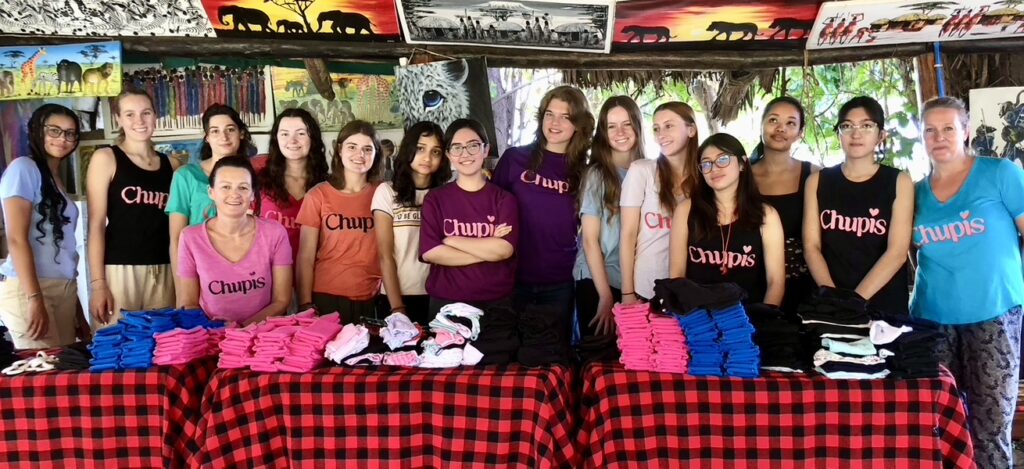
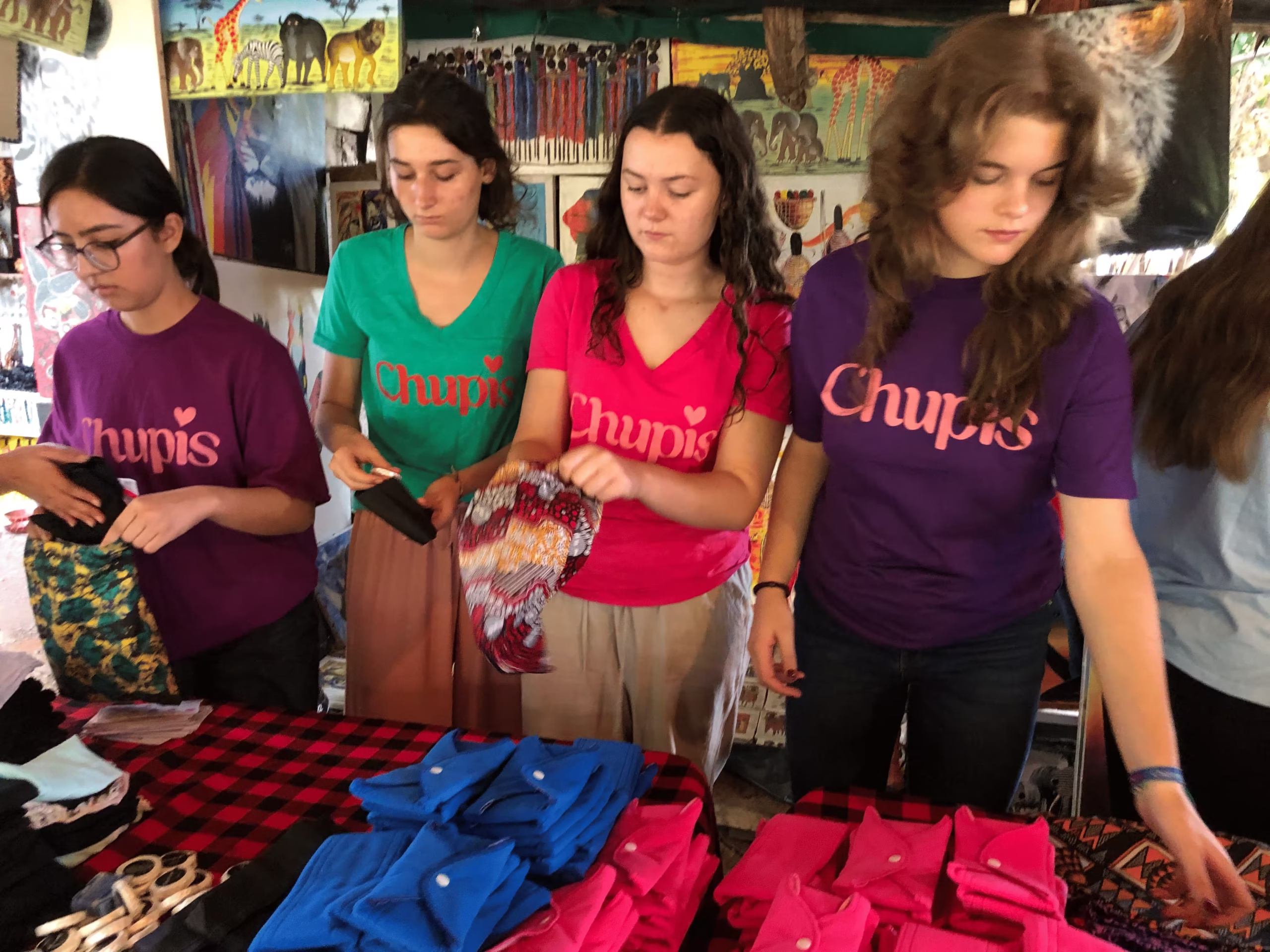
We are proud to work alongside students from the International School of Toulouse, the American International School of Lusaka (Zambia), St Constantine’s International School (Arusha, Tanzania), and the Lycée Joseph Saverne in France. These students are not only learning about period poverty, but they are also taking meaningful action to address it.
Students have participated in packing and distributing dignity kits, as well as attending training sessions. Students from the International School of Toulouse travelled to Tanzania to take part in kit handouts in Arusha, and Mto wa Mbu, working alongside local communities and gaining firsthand insight into the impact of Chupis’ work.
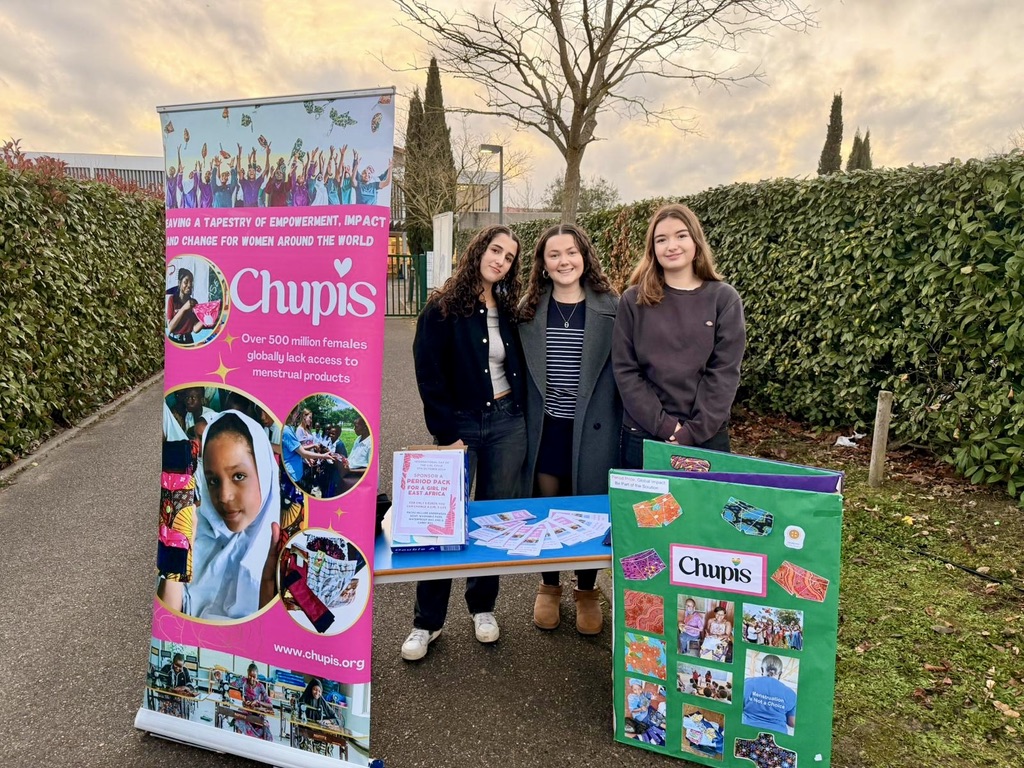
At St Constantine’s International School, student involvement has gone even further. These students received training, and during our most recent handout in Mto wa Mbu, they confidently led the training sessions themselves.
A powerful example of youth leadership in action.
Importantly, both AIS Lusaka and St Constantine’s have actively involved boys in their programs. This is a key step in breaking stigma and fostering understanding. Recently in Tanzania, we delivered our first boys’ workshops, with sessions designed collaboratively by students and teachers at St Constantine’s. These sessions focused on puberty, respect, and awareness. Each of the young men received a pair of boxer shorts. Normalising conversations around health, hygiene, and dignity for all.
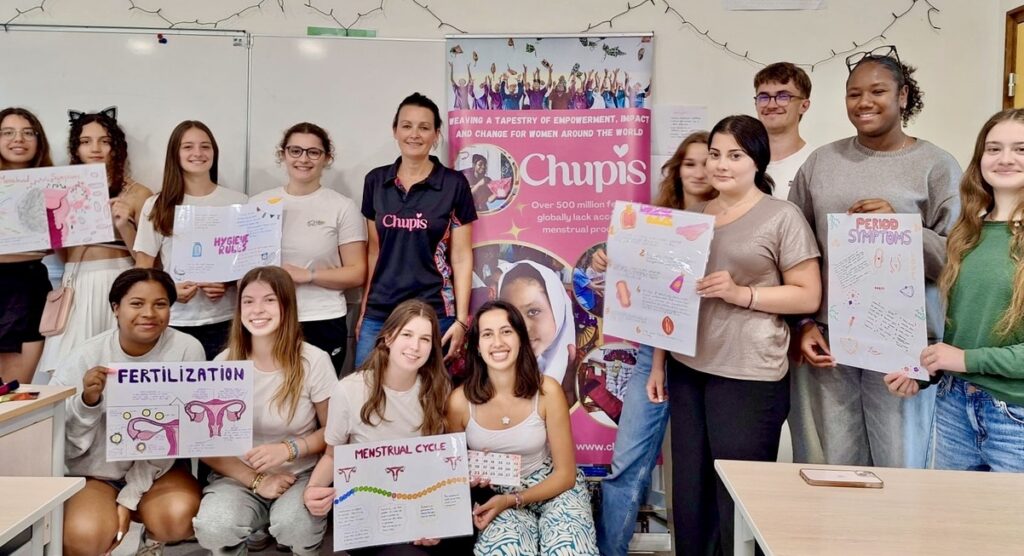
A special contribution from students at Lycée Joseph Saverne in France. They designed and created educational posters, and menstrual calendar charts for display. These resources were taken to Tanzania, where girls can use them to track their menstrual cycles. Supporting both education and confidence in managing their health.
Through these experiences, students are not only supporting Chupis’, they are also becoming informed, compassionate leaders who understand the importance of equity and dignity. The collaboration between students across continents highlights something we see time and time again:
“young people are not just the future, they are the key to driving change.“